Most organisations create content like they’re throwing darts at a dartboard. A post here. A video there. An email campaign because someone asked for one. A blog post because it seemed like a good idea at the time.
The result is a scattered, inconsistent presence that doesn’t build toward anything.
The atomisation model replaces scatter with system.
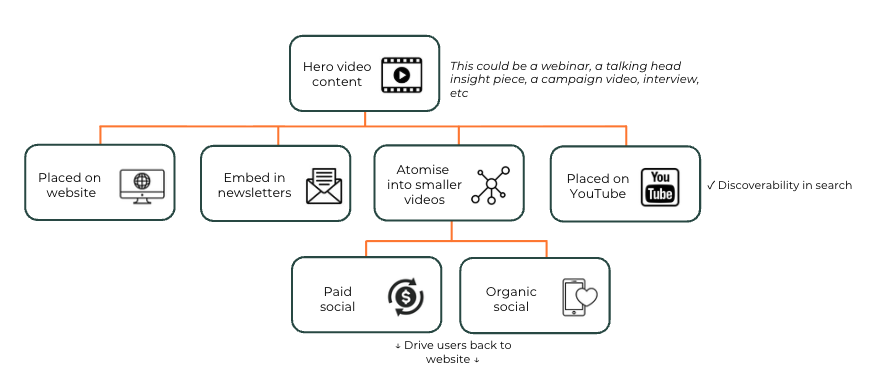
The model explained
The hero piece is your primary content asset – a substantial, high-value piece of content that represents your best thinking on a topic. It could be:
- A podcast episode
- A long-form blog post or article
- A YouTube video
- A webinar or live session
- A downloadable guide or report
The atoms are smaller pieces of content derived from the hero – repurposed for different channels and audiences.
One hero piece of content becomes:
- 3-5 social media posts (LinkedIn, Facebook, Instagram)
- An email newsletter
- A short video clip or reel
- A quote graphic
- A story or behind-the-scenes post
One idea. Many formats. Maximum reach. Minimum waste.
Why this model works for disability sector organisations
The atomisation model is particularly powerful for small teams and solo operators because it solves the biggest content problem: running out of things to say.
With this model, you never start from scratch. You create one substantial piece of thinking, then find all the different ways it can be expressed.
Exercise
Take your best recent piece of content. List every possible spoke you could derive from it. Aim for at least 8. You probably have more content than you think.