
A rebrand takes anywhere from about six weeks to well over a year. The spread has little to do with design hours and a lot to do with how quickly your people decide, how many people have to agree, and whether a new name has to clear legal checks first. Industry guidance puts a focused startup with one clear decision-maker at roughly 6 to 12 weeks, and larger, more complex organisations at 12 to 18 months.
This guide breaks the timeline into phases, shows where the time really goes, and flags the Australian-specific waits (trade marks, accessibility) that catch organisations out. It is written for disability organisations, social enterprises, startups and established businesses planning a rebrand.
TL;DR
- A small, centralised team can rebrand in 6 to 12 weeks. A large or multi-stakeholder organisation should plan for 12 to 18 months.
- Decision-making speed, revision rounds and internal sign-off stretch a timeline far more than creative work does.
- If you are changing your name, IP Australia’s examination alone takes 3 to 4 months, plus a 2 month opposition window.
- Disability organisations should build accessibility and community consultation in from day one, not add them at the end.
- Budget for the rollout. It is the phase most often left off the plan.
Table of Contents
- Why there is no single answer
- A realistic timeline, phase by phase
- The accessibility layer disability organisations cannot skip
- What actually makes rebrands run late
- Choosing your launch window
- Our perspective: slow down at the start to speed up everywhere else
- Working with us on your rebrand
- A starter checklist for your timeline
- FAQ
- Sources
Why there is no single answer
When people ask how long a rebrand takes, they usually picture the design: a new logo, colours, maybe a website. Brand strategy and design are only part of the job. As Brandactive notes, organisations often stop their line of sight at the finished strategy and design, when there is far more to a rebrand than that.
Three variables decide your timeline:
- Scope. Refreshing a logo and palette is a different project from changing your name, positioning and audience.
- Decision structure. One founder who can say yes on Tuesday is a very different project from a board, a CEO, a leadership team and a member council.
- Footprint. The more signage, forms, templates, websites, funding documents and partner materials carry your brand, the longer the rollout.
A rebrand also has a resource cost. One industry source suggests that rebrands can consume 10 to 20% of annual marketing budget and take 30 to 50% of available team capacity at peak periods. Treat those as indicative, but they explain why rebrands slip when they are squeezed in beside day-to-day work.
A realistic timeline, phase by phase
The ranges below are a planning guide, not a promise. They assume a small to mid-sized organisation with a clear lead decision-maker. Add time wherever approvals involve a committee. The phased approach itself is common across the field: Papirfly describes five phases, and the structure below follows the same logic.
| Phase | What happens | Typical planning range |
|---|---|---|
| 1. Discovery and alignment | Audit of current brand, audience and community input, agreeing goals | 2 to 6 weeks |
| 2. Brand strategy | Positioning, purpose, messaging, name decisions | 3 to 6 weeks |
| 3. Name and legal checks (if renaming) | Clearance search, trade mark application, domain and handles | 1 to 2 weeks to search, 5 to 6 months to register |
| 4. Visual and verbal identity | Logo, palette, typography, tone of voice, accessible templates | 4 to 8 weeks |
| 5. Asset build | Website, templates, social profiles, documents, signage | 4 to 12 weeks |
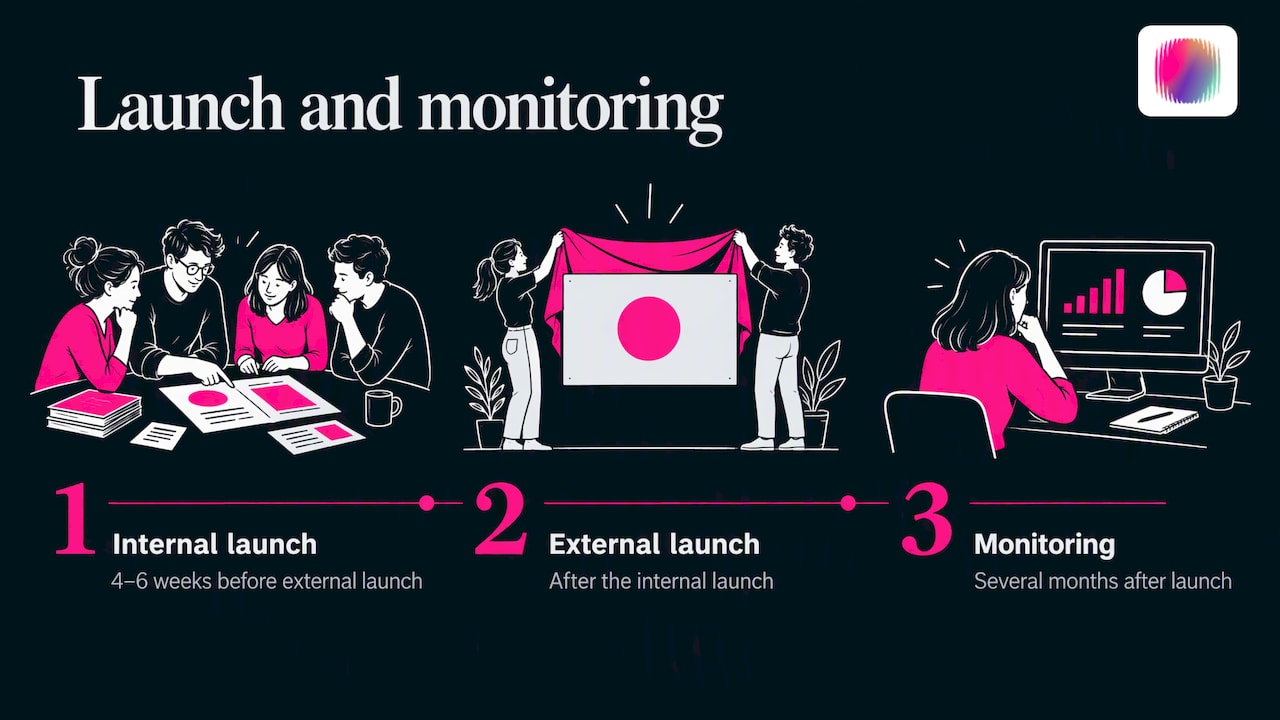
| 6. Internal launch | Briefing and training staff, volunteers, board | 4 to 6 weeks before external launch |
| 7. External launch and bedding in | Announcement, switchover, tracking | 3 to 6 months of monitoring |
Several phases overlap. Asset building can start once the identity is approved, and legal checks can run alongside strategy. Nothing in the table is quick if feedback loops are slow.
Phase 1: discovery and alignment
This is the phase most often rushed, and the most costly to rush. The most common pitfall experts flag is skipping the foundational strategy work: a brand’s strength comes from insight, not just aesthetics, and launching without alignment tends to produce confusion and distrust.
In practice, this phase covers:
- Auditing everything that carries your brand today, from the website to funding applications.
- Interviewing staff, board members, clients, supporters and partners.
- Writing down why you are rebranding and what success looks like.
For disability organisations, add one more step: consult the people you serve. An identity that the community does not recognise as theirs will not hold, however polished it looks.
Phase 2: brand strategy
Strategy sets the positioning, the story and the messaging that everything else follows. It is also where stakeholder alignment is won or lost. Two or three workshop rounds with the right people usually beat a dozen rounds of email feedback. Decide up front who has final say, and stick to it.
Phase 3: name and legal checks
If you are keeping your name, skip this phase. If you are changing it, this is the one that can quietly add months.
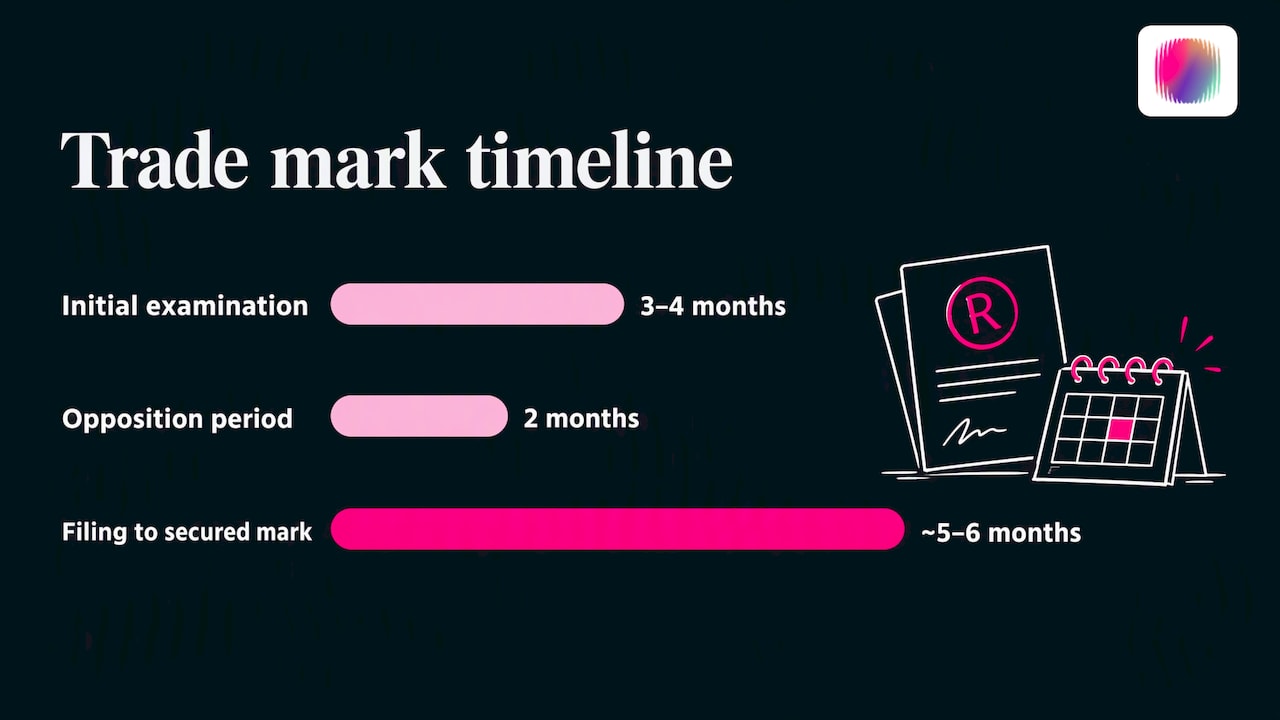
IP Australia states that, after you file a trade mark application, initial examination takes 3 to 4 months. If it is accepted, the mark is published for a 2 month opposition period before it can proceed to registration. That is roughly five to six months from filing to a secured mark, assuming no complications.
A few practical points:
- A quick clearance search can be done in days, so do it before you fall in love with a name.
- IP Australia offers a pre-application service (TM Headstart) that gives you feedback from an examiner before you file, which is useful if you have not filed before.
- Using a name for years does not automatically protect it. IP Australia’s own guidance says prior use is no substitute for registering, and proving it can be slow and expensive.
Most organisations file as soon as the name is chosen, then continue with design while the application is examined. Whether you launch before registration is a risk decision for your board. For anything high-stakes, speak to a trade mark attorney.
Phase 4: visual and verbal identity
This is the phase everyone imagines when they think of a rebrand. Logo, colour, type, imagery, tone of voice. Four to eight weeks is realistic when feedback is consolidated into a single list per round. It stretches when five people each send their own comments.
Two habits keep this phase tight:
- Agree the decision-maker and the number of revision rounds in advance.
- Test colours and type for contrast and legibility early, so you do not redesign later.
Phase 5: building the assets
The identity is approved, but nothing is branded yet. This phase includes the website, email signatures, report and proposal templates, social profiles, brand guidelines, slide decks, forms, uniforms and signage. List every touchpoint before you start. An asset inventory is the simplest way to stop a rollout stalling on item 47.
If you have more touchpoints than you can count, stage them. Put public-facing and high-traffic items first (website, social profiles, email), then work through the long tail.
Phase 6 and 7: launch and bedding in
Tell your own people first. One rollout guide recommends the internal launch happen 4 to 6 weeks before the external launch, long enough to align everyone without letting the news leak. We have not verified that source’s full guidance, so treat the range as a sensible starting point and adjust it to the size of your team.
After launch, plan on several months of monitoring. Digital engagement and website metrics show up first, and awareness and customer sentiment take longer to read.
The accessibility layer disability organisations cannot skip
For an organisation serving people with disability, a rebrand is a public test of your values. The Australian Human Rights Commission explains that accessible and inclusive communication means making sure messaging meets the communication needs of everyone in your community, whether they are employees or customers.
That has direct timeline consequences:
- Easy Read versions of key documents need writing and design time of their own.
- Screen-reader compatibility has to be planned into the website build and the document templates, not patched on afterwards.
- Language choices, such as person-first versus identity-first, need community input in the strategy phase, not a last-minute copy edit.
Building these in from day one costs far less than retrofitting. Retrofitting also risks damaging trust with the very community the brand exists for. Allow extra weeks in phases 1, 4 and 5 for this work, and you will usually save them again in phase 7.
What actually makes rebrands run late
The design is rarely the cause. The usual culprits are:
- Slow or unclear sign-off. Multiple revision rounds and approval committees add weeks each time.
- No internal training time. Staff and volunteers who are not briefed will keep using the old brand.
- Late legal checks. A name that fails clearance after the logo is drawn means starting again.
- Underestimated asset volume. The long tail of documents and signage always takes longer than the website.
- Capacity. Your team still has a day job. Planning around peak workload periods and clear role definitions keeps momentum.
Choosing your launch window
There is no universally correct month, but Australian organisations have natural anchors. The start of the financial year on 1 July suits organisations that report, budget and apply for funding on that cycle. The start of the calendar year works for those who want a fresh-year narrative. A quiet period before a busy season gives you room to bed things in. Work backwards from your chosen date, and add a buffer of a few weeks for approvals.
Sequencing matters just as much as the date. Plan which channels go first, who is told when, and how your announcement is spread across email, social and your website. Founder-led teams in particular benefit from not depending on one person to carry every announcement. If social media is part of your rollout, our guide to social media management costs in Australia will help you budget for it.
Our perspective: slow down at the start to speed up everywhere else
We work with disability organisations and social enterprises, and our team includes young creatives with lived experience of disability. That shapes how we see timelines.
The organisations that get stuck are rarely stuck on creative. They are stuck because the strategy was never properly agreed, or because the community was consulted at the end rather than the beginning. Generic imagery and messaging are the usual result of rushing: a brand that looks like every other brand in the sector because nobody had the time to ask what makes it different.
So we would rather spend the extra two weeks at the start. Get the people you serve in the room. Agree who decides. Decide what “accessible” means for your brand before a single colour is chosen. Then the design and rollout phases move quickly, because nobody is relitigating the basics.
One more thing: treat your rollout as a project of its own, not an afterthought. Most leaks, the old logo on a forgotten form, the mismatched email signature, happen after launch day. A plan for that period is worth the effort.
— Tommy
Working with us on your rebrand
DISBRANDED offers brand strategy, brand design, creative assets, web design, social media and DIY brand-building courses for disability organisations and social enterprises. If you want a team to run the full process, see our services. If you want a practical plan for the weeks after launch, start with our rebrand rollout plan and checklist. Our brand guides are a good starting point if you prefer to work through it yourself.
A starter checklist for your timeline
Before you ask anyone for a quote or a date, answer these:
- Why are we rebranding, and what will be different in 12 months if it works?
- Are we changing the name? If so, who is running the clearance search and trade mark filing?
- Who has final sign-off, and how many revision rounds will we allow?
- Which community members, clients and staff will we consult, and when?
- What is the list of every touchpoint that carries our brand?
- What date do we want to launch, and is there a buffer before it?
- Who is responsible for training staff and volunteers?
- How will we check that everything we produce meets accessibility needs?
If you can answer these confidently, you can plan a timeline you will actually hit.
FAQ
How long does a rebrand take?
It depends on scope and decision-making. A small, focused startup with centralised decisions can often manage it in 6 to 12 weeks, while larger, more complex organisations commonly need 12 to 18 months. Use those as the outer edges and place yourself by how many people need to approve each step.
Does changing our name make a rebrand take longer?
Yes, usually. IP Australia’s trade mark examination takes 3 to 4 months, followed by a 2 month opposition period. You can run design alongside it, but you should decide deliberately whether to launch before registration.
When should we tell staff and volunteers?
Before the public. Brief and train your internal team ahead of the external launch so that everyone is ready to use the new brand consistently. Leave enough time to align people, but not so much that the news leaks.
Can we rebrand in 30 days?
Only a narrow rebrand, such as a refresh with no name change, no consultation and a very small number of touchpoints. For a disability organisation, community consultation and accessible formats alone usually push beyond that. Rushing the foundations is the most common way rebrands fail.
Sources
- Rebranding Timeline: How long does it take to rebrand? (Brandactive)
- The 5 key phases to a realistic rebranding timeline (Papirfly)
- How to apply for a trade mark (IP Australia)
- A simple breakdown of names and trade marks (IP First Response)
- Creating accessible and inclusive communications (Australian Human Rights Commission)